More Than 100 Residents Gather to Reclaim Pelham’s Natural History, Sharing Stories of Place and Hope
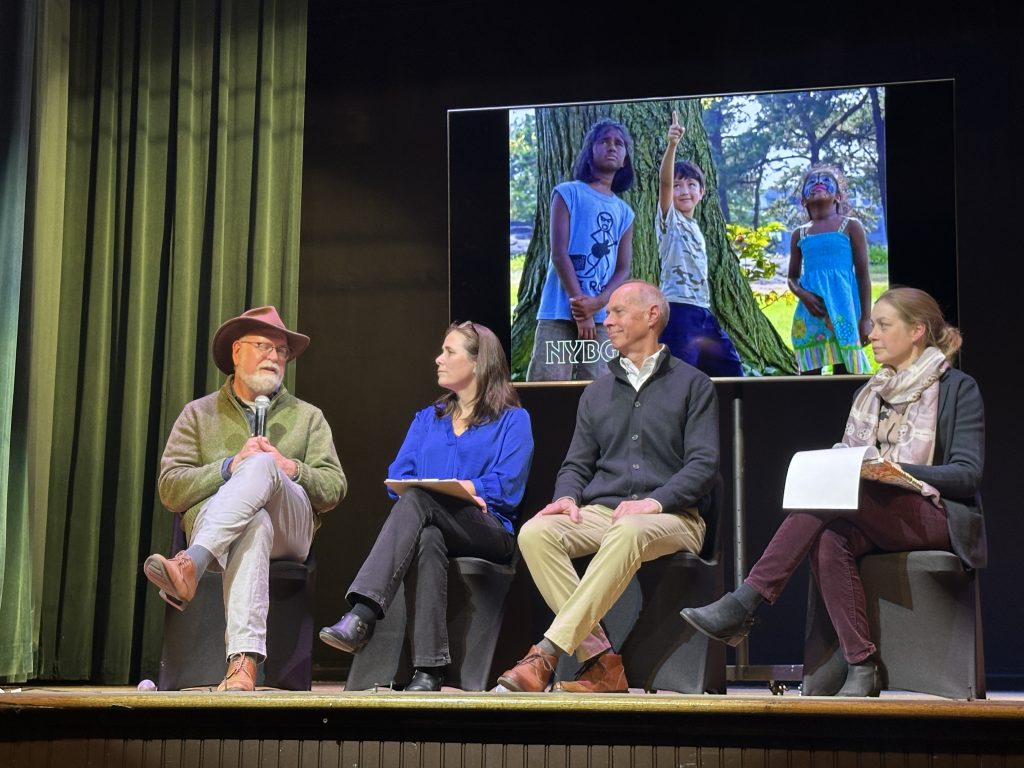
More than 100 residents filled The Manor Club on January 8 for Reclaiming Pelham’s Natural History: A Conversation with Eric Sanderson. The evening explored the town’s ecological past, examined its present landscape, and invited active community engagement around a more climate-resilient future rooted in a shared sense of place.
Opening the evening,Tai Montanarella of the Environmental Coalition of the Pelhams (EcoPel), welcomed the audience and thanked The Manor Club and the Pelham Preservation & Garden Society for their collaboration in making the free event possible. Montanarella framed historical ecology as a way of understanding what Pelham was like before it was built—and how forests, wetlands, and streams continue to shape neighborhoods, water flow, and flood risk today.
Town Historian Art Scinta grounded the conversation in Pelham’s present, using historic maps and images to show how local streets, parks, and waterways have changed over time. By contrasting early 20th-century homes surrounded by trees with today’s streetscapes, Scinta illustrated the dramatic loss of tree canopy. He shared a personal memory of stepping off the Metro-North train less than two decades ago and walking home beneath a dark, forested canopy—underscoring the feel of a neighborhood that has been lost, along with the ecosystem services those trees once provided.
Landscape ecologist Eric Sanderson, author of Mannahatta: A Natural History of New York City, then took the audience deeper into Pelham’s past, describing the region as part of a once-continuous Appalachian oak-hickory forest shaped by water, soils, and Indigenous use. He emphasized that historical ecology is not about recreating the past but about understanding how natural systems continue to influence communities today. “All history has a natural context,” Sanderson noted, adding that neither nature nor culture is static.
Sanderson also observed that historical wisdom often comes through local storytelling rather than policy or technical reports—parables that show how past choices shaped the landscape and what those choices mean today.
Those ideas carried into the moderated panel and community conversation led by Suzann Michailoff of the Pelham Preservation & Garden Society, a certified Cornell Cooperative Extension Climate Steward. Panelists included Allison Anderson of the Junior League of Pelham, Art Scinta of the Pelham Tree Conservancy, and Anna Simonsen-Meehan of Pelham Vine Squad and Plant Pelham Native. They described how their organizations are restoring native plants, managing invasive-species, building bioswales and pollinator gardens, and planting native trees and shrubs to reconnect Pelham with its natural landscape.
During the reception, residents and local officials added their voices in conversation with panelists. Town Supervisor Theresa Mohan discussed the Village of Pelham’s Natural Resources Inventory and the Town’s pursuit of grant funding for a Pelham Street Tree Inventory and Management Plan, highlighting them as tools to help guide community restoration.
Neighbors who were unable to attend may still contribute through the community survey, which asks for stories about Pelham’s past and the prompt: “In 20 years, what would you like Pelham’s neighborhoods to look like if we planned with nature in mind—and what’s one action we could take now to begin?” Together, community engagement, shared stories, and planning tools are beginning to form a living map of Pelham’s sense of place—reflecting where the town has been and where it hopes to go.